Horse Racing Betting in the UK – The Data-Driven Punter’s Guide
 Available in US
I placed my first horse racing bet at Newbury in 2014 – a fiver each way on a mare whose name I liked. She finished fourth. I collected a small place payout, felt unreasonably clever, and spent the next twelve years trying to understand why that feeling was so dangerously addictive. That journey turned into a career analysing odds, form, and the machinery behind the UK’s second most attended sport.
Horse racing betting in the UK is not a hobby – it is a £4.1 billion economic engine that supports roughly 85,000 jobs across 59 licensed racecourses, training yards, and breeding operations. The numbers alone set it apart from every other betting market. But what makes it truly distinct is the depth: a betting ecosystem where pari-mutuel pools, fixed-odds bookmakers, and peer-to-peer exchanges all compete for your stake, each with different mechanics, different edges, and different traps.
This guide exists because the top results for “horse racing betting UK” are dominated by bookmaker landing pages and affiliate comparison sites. They want your first deposit. I want you to understand what happens to it. Every claim in these pages is backed by data from the Gambling Commission, the British Horseracing Authority, and the Horserace Betting Levy Board – not by marketing teams. Whether you are placing your first bet or refining a staking plan that has run for years, the structure here moves from market context through mechanics to strategy, with the regulatory reality woven in throughout.
The market has shifted dramatically since 2022. Turnover has fallen, regulation has tightened, and the black market has grown at a pace that alarms everyone from racecourse clerks to Treasury officials. Understanding these forces is not optional background reading – it directly affects the value available to you and the rules you operate under. So this is where we start: with the numbers that frame everything else.
Table of Contents
- What Every Punter Should Know Before Backing a Horse
- The £766 Million Market – UK Horse Racing Betting by the Numbers
- Bet Types at a Glance – From Singles to Lucky 15s
- Fractional, Decimal, and SP – How UK Racing Odds Work
- Reading the Racecard – Five Factors That Actually Matter
- Best Odds Guaranteed – Free Value Most Punters Ignore
- Flat Racing and National Hunt – Two Sports Under One Roof
- Affordability Checks, the UKGC, and What Changed in 2025
- When the Money Flows – Seasonal Betting Patterns in UK Racing
- Your First Horse Racing Bet – A Step-by-Step Walkthrough
- Where UK Horse Racing Betting Goes From Here
- Common Questions About Horse Racing Betting in the UK
What Every Punter Should Know Before Backing a Horse
- UK horse racing betting generated £766.7 million in GGY in the year to March 2025, but real-terms turnover has fallen roughly £3 billion since 2022 – driven largely by tighter regulation and affordability checks now triggered at just £150 in net monthly deposits.
- Each way, accumulators, and full-cover bets like the Lucky 15 serve different risk profiles. Choosing the right bet type for the race conditions and field size matters more than picking winners.
- Best Odds Guaranteed is free value: it costs nothing to activate and regularly delivers better payouts. Holding two or three bookmaker accounts and comparing prices yields 2-5% better returns over time.
- Form analysis is the only consistent edge. Five factors – recent form, going, distance, jockey-trainer partnership, and class – applied systematically will outperform guesswork, tips, and gut feeling.
- The market is splitting: Premier fixtures and major festivals are thriving while core midweek cards are losing turnover. Concentrate your heaviest betting where liquidity and field quality are strongest.
The £766 Million Market – UK Horse Racing Betting by the Numbers
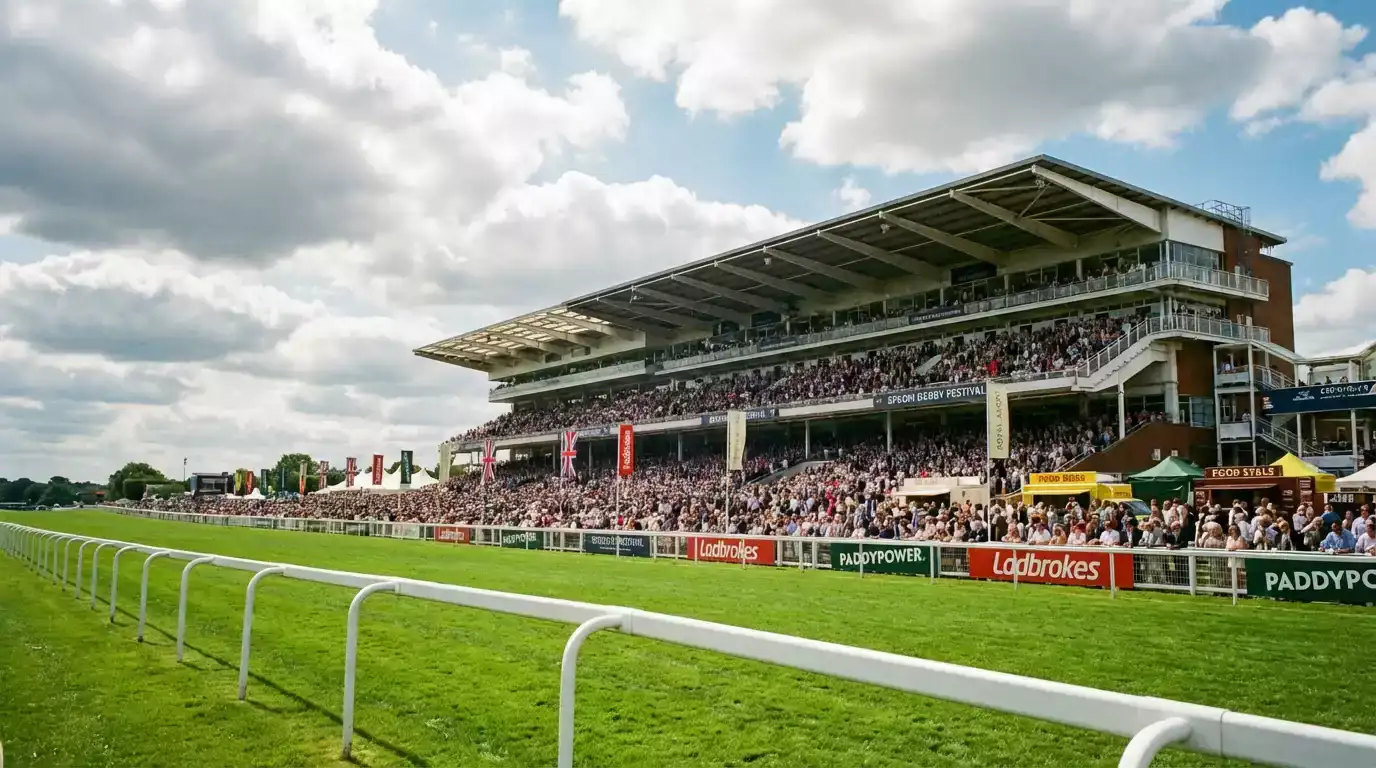
Last spring I sat in a press room at Cheltenham and watched the on-screen GGY ticker climb past £40 million for the festival week alone. Impressive – until you pull back and see the wider trend. Remote horse racing betting generated £766.7 million in gross gaming yield for the year ending March 2025. That sounds healthy. It is not. Total online turnover on horse racing has dropped by £1.6 billion since 2022, and once you adjust for inflation, the real decline is closer to £3 billion.
£766.7m
Remote horse racing GGY, April 2024 – March 2025
5.031m
Racecourse attendance in 2025 – first time above 5 million since 2019
85,000
Jobs supported by the racing industry across the UK
£109m
Record Levy Board yield in 2024/25
59
Licensed racecourses operating in Great Britain
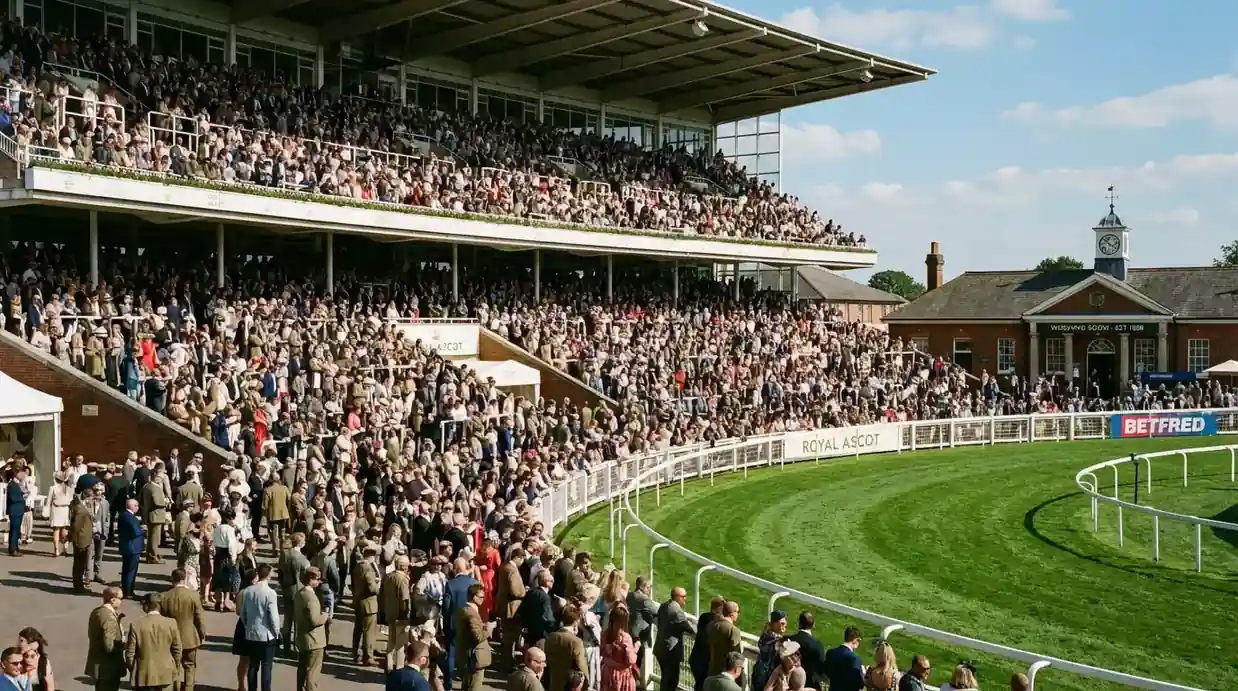
Those two facts – falling turnover and record attendance – create a paradox that defines the current market. More people than ever are walking through racecourse gates, yet fewer of them are betting, and those who do bet are staking less. Richard Wayman, the BHA’s Director of Racing, put it bluntly: total betting turnover fell nine per cent in the first quarter of 2025 compared with the same period a year earlier, and while the racing product itself needs work, a much wider range of factors is driving the decline.
The wider factors he hints at are regulatory. Affordability checks, tightened deposit thresholds, and a general chilling effect on recreational punters have all contributed. But here is the counterintuitive part: while turnover drops, the Horserace Betting Levy Board collected a record £109 million in 2024/25, up from £105 million the previous year. The Levy is a fixed 10% charge on bookmaker profits from bets on British racing above a £500,000 threshold. Bookmaker margins have widened even as volumes have shrunk – meaning the industry takes a larger cut from a smaller pool.
The Levy Board explained
The Horserace Betting Levy Board collects 10% of bookmaker profits on British horse racing and redistributes it as prize money, fixture financing, and grants. In the 2026 financial package, the HBLB allocated £77.1 million to prize money alone, including £4.4 million in additional funding. A further £11 million went to non-fixture grants, with £3.62 million earmarked for a national marketing campaign. For a deeper look at how the Levy shapes the sport, the mechanics are worth understanding – because every bet you place contributes to it.
The economic footprint extends well beyond the betting slips. British racing contributes £4.1 billion annually to the UK economy through direct, indirect, and associated activity. More than 20,000 people work directly on racecourses, in training yards, and at stud farms. Racecourse attendance hit 5.031 million in 2025 – a 4.8% increase on 2024 and the first time the figure has cleared five million since the pre-pandemic year of 2019. Prize money rose 3.5% to £194.7 million. Yet the horse population is shrinking: just 21,728 horses were in training in 2025, down 2.3% on the year before.
These are not abstract numbers. They shape what you can bet on, when you can bet, and how much value the market offers. A contracting horse population means fewer runners per race, which affects each way terms, forecast dividends, and field quality. Record Levy yields fund better prize money, which attracts better horses to better races – but only at the Premier fixture level. Core fixtures, the bread-and-butter midweek cards that most regular punters bet on, saw per-race turnover drop 14.4% year on year in Q1 2025. The premium end of the market is holding up. The rest is eroding.
With the market mapped, the next question is practical: what can you actually do with your stake?
Bet Types at a Glance – From Singles to Lucky 15s
Favourites win roughly 33% of all UK horse races. That single stat should recalibrate every assumption you bring to a betting slip. Two thirds of the time, the horse the market considers most likely to win does not win. The entire art of horse racing betting sits in the gap between that 33% strike rate and the prices the market offers – and the bet type you choose determines how you exploit it.
At its simplest, horse racing offers a win bet – back a horse to finish first. But simplicity and profitability rarely overlap. The UK market has evolved dozens of bet types, each designed for a different risk appetite and a different read on the race. Understanding which to use and when is the foundation of everything that follows.
A win bet pays out only if your selection finishes first. A place bet pays if the horse finishes in the top two, three, or four positions, depending on the number of runners and the type of race. These are the building blocks – every other bet type is a variation or combination of these two.
Each way – two bets in one: a win bet and a place bet, at equal stakes. If your horse wins, both halves pay. If it places but does not win, only the place half returns.
Forecast – predicting which horses finish first and second, in exact order (straight) or any order (reverse).
Tricast – predicting the first three finishers in exact order. Higher difficulty, substantially larger payouts.
Accumulator – combining selections from multiple races into a single bet. All must win for the bet to pay. Returns compound across legs.
Lucky 15 – a full-cover bet on four selections: 4 singles, 6 doubles, 4 trebles, and 1 four-fold. Fifteen bets total. Returns something even if only one selection wins.
How Each Way Actually Pays Out
Each way is the bet type I use most often, and the one most beginners misunderstand. When you place a £10 each way bet, you are placing two separate £10 bets – £20 total outlay. The first £10 backs your horse to win. The second £10 backs it to place. If the horse wins, you collect on both. If it finishes in a place position but does not win, you lose the win half and collect on the place half only.
The place half pays at a fraction of the win odds. Standard terms: in races with 5 to 7 runners, bookmakers pay 1/4 of the win odds for the first two places. In handicap races with 8 or more runners, they typically pay 1/4 odds for the first three places. In handicaps with 16 or more runners, some bookmakers extend to 1/4 odds for four places.
Each way calculation
Horse odds: 10/1. Stake: £10 each way (£20 total). Place terms: 1/4 odds, 3 places.
If the horse wins: Win part returns £10 x 10 + £10 stake = £110. Place part returns £10 x 2.5 + £10 stake = £35. Total return: £145. Profit: £125.
If the horse places (2nd or 3rd): Win part loses £10. Place part returns £35. Total return: £35. Profit: £15.
If the horse finishes 4th or worse: Both bets lose. Loss: £20.
The maths matters because each way is not always better than a straight win bet. On short-priced favourites, the place return barely covers your doubled stake. Each way shines on bigger-priced selections in large fields – exactly the scenarios where the place fraction delivers meaningful insurance. For a thorough breakdown of place terms, extra place offers, and the maths behind optimal use, the full each way guide covers territory this overview cannot.
Doubles, Trebles, and Full-Cover Bets
Doubles, trebles, and accumulators all follow the same logic: the returns from one selection roll into the stake for the next. A double combines two selections – both must win. A treble combines three. An accumulator (or acca) combines four or more. The appeal is obvious: compounding odds creates large potential returns from small stakes. The risk is equally obvious: one loser kills the entire bet.
Double – two selections, both must win. Returns from the first become the stake on the second.
Treble – three selections, all must win. Same compounding principle.
Patent – a full-cover bet on three selections: 3 singles, 3 doubles, 1 treble. Seven bets total.
Lucky 15 – full-cover on four selections: 15 bets. Many bookmakers offer consolation bonuses if only one selection wins, or enhanced returns if all four win.
Lucky 31 – full-cover on five selections: 31 bets. Same bonus structure as Lucky 15.
Full-cover bets like the Lucky 15 exist because they trade raw potential return for survivability. With a straight four-fold accumulator, one loser means zero return. With a Lucky 15, one winner from four still generates a payout – often enhanced by bookmaker bonuses. The tradeoff is cost: a £1 Lucky 15 costs £15. Whether that insurance is worth the premium depends on the prices of your selections and your confidence level. The deeper comparison between accumulators, full-cover bets, and when each makes mathematical sense runs longer than this overview allows.
Fractional, Decimal, and SP – How UK Racing Odds Work
A punter I know spent three years betting on horses before realising that 5/2 and 3.50 are the same price. He is not unusual. The UK racing market quotes odds in fractional format – 5/2, 7/1, 11/4 – while exchanges and European operators use decimals. Both express the same thing: the relationship between your stake and your potential return. Neither is inherently better, but understanding both prevents the kind of confusion that costs money.
Fractional odds work like this: the first number is what you win, the second is what you stake. At 5/2, you win £5 for every £2 staked. At 7/1, you win £7 for every £1 staked. Odds-on prices – where the second number is larger than the first, like 4/6 – mean you risk more than you stand to gain. The decimal equivalent is simply the fractional odds plus one: 5/2 becomes 3.50, 7/1 becomes 8.00, 4/6 becomes 1.67.
Fractional to decimal conversion
Fractional: 9/4. Divide 9 by 4 = 2.25. Add 1 = 3.25 decimal.
To calculate returns: £10 at 9/4 fractional = £10 x 2.25 = £22.50 profit + £10 stake = £32.50 total return. Or: £10 x 3.25 decimal = £32.50 total return.
Fractional odds
Traditional UK format. Used by on-course bookmakers, most high-street shops, and the majority of online bookmakers as default. Intuitive for “how much do I win” calculations. Less useful for comparing close prices or calculating implied probability.
Decimal odds
Standard on betting exchanges and widely used in European markets. Total return is built into the number – multiply your stake by the decimal and that is your total return including stake. Easier for comparing close prices and essential for exchange trading.
Then there is SP – the Starting Price. This is the official price of a horse at the moment the race begins, determined by on-course bookmakers and SP reporters. If you do not take a fixed price before the off, your bet settles at SP. Sometimes SP is generous, sometimes it is not. The variable that governs it is market confidence: a horse that attracts heavy late money will see its SP shorten, while one that drifts in the market will return a longer SP. The detail behind how SP is set, who the reporters are, and when SP actually offers an edge runs deep enough to deserve its own space.
One number worth understanding early: pari-mutuel betting – the Tote pool system – accounts for just 5% of all UK horse racing turnover. The remaining 95% goes through fixed-odds bookmakers. This is almost the exact inverse of markets like France, where pari-mutuel dominates. The practical effect is that UK punters deal overwhelmingly with bookmaker-set prices rather than pool dividends, which means the bookmaker’s margin – the overround – is the tax you pay on every bet, whether you notice it or not.
Reading the Racecard – Five Factors That Actually Matter
Three years into my career I tracked every bet I placed for a full National Hunt season. The exercise was humbling. The bets where I had studied the form returned a small profit. The ones where I had guessed, followed a tip, or simply liked the name lost consistently. Form analysis is not a guarantee – nothing in racing is – but it is the only tool that shifts the odds from random to informed.
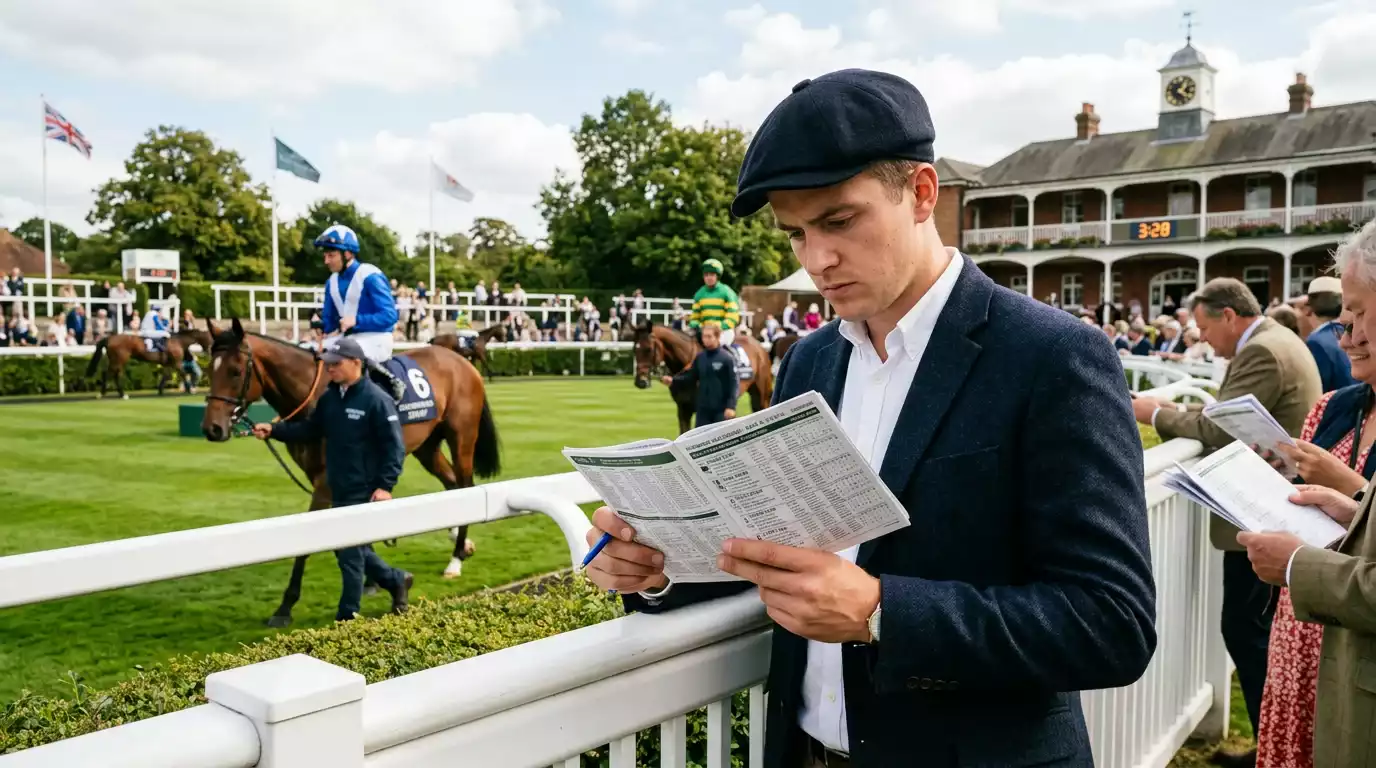
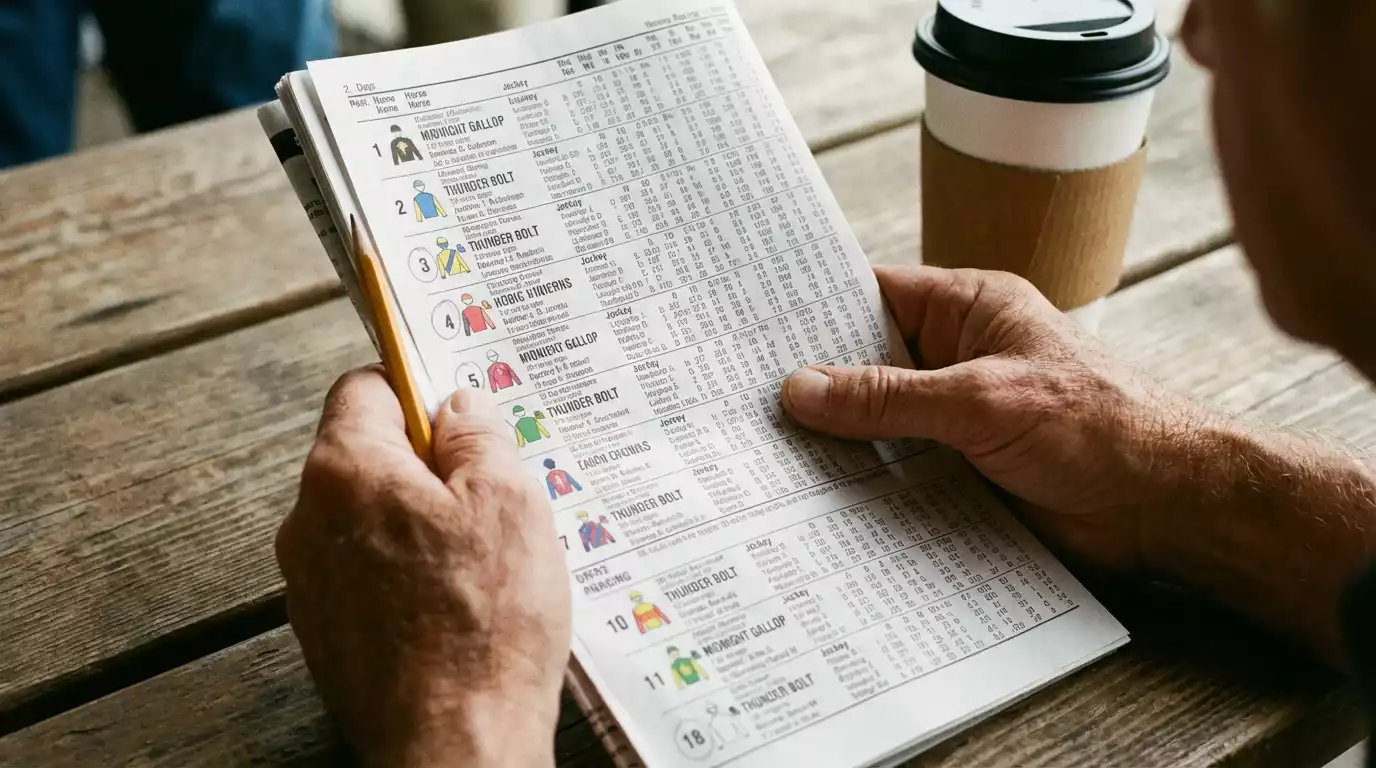
A racecard packs an enormous amount of information into a small space: form figures, weight, draw, going preference, trainer and jockey stats, class history, headgear, and more. You do not need all of it. You need five factors, applied consistently.
Five factors before every bet
- Recent form – read the form figures right to left (most recent first). Focus on the last three runs. A horse showing 1-2-3 in its recent form is in a different league from one showing 0-P-8. Look for consistency, not just wins.
- Going – the ground condition. A horse that loves soft ground will struggle on firm. Check the going report on the day, not the day before – it changes. The difference between Good to Soft and Soft can be the difference between winning and trailing in.
- Distance – does this horse run well at this trip? A two-mile specialist entered in a three-mile race is not a bet, it is a donation. Course and Distance (C&D) winners deserve extra respect.
- Jockey-trainer combination – certain partnerships produce results far above their individual strike rates. A trainer sending a horse to a track where they rarely run is a warning. A jockey booked specifically for a horse they have won on before is a signal.
- Class – horses dropping in class after racing at a higher level often run well. The official BHA rating tells you where a horse sits in the hierarchy. A horse rated 95 competing in a 0-85 handicap has a clear edge on ratings alone.
Understanding going
UK racecourses use a scale from Firm (driest) through Good, Good to Soft, Soft, to Heavy (wettest) for turf, with separate classifications for all-weather surfaces. The going is measured using a GoingStick, which tests penetration and shear of the ground at multiple points across the track. Going descriptions can change between the time declarations close and the race itself – always check the latest update. A full going guide covers the scale, GoingStick readings, and how to spot ground specialists in the form book.
None of these factors works in isolation. The horse with the best recent form might hate the going. The class drop might be negated by a distance stretch. The skill is in weighting them against each other – and that weighting changes by race type. In sprint handicaps, draw and going dominate. In staying chases, stamina and jumping ability matter more than anything the racecard tells you about speed. The complete form guide builds a practical system for combining these factors into a pre-race assessment that can be applied to any card.
Best Odds Guaranteed – Free Value Most Punters Ignore
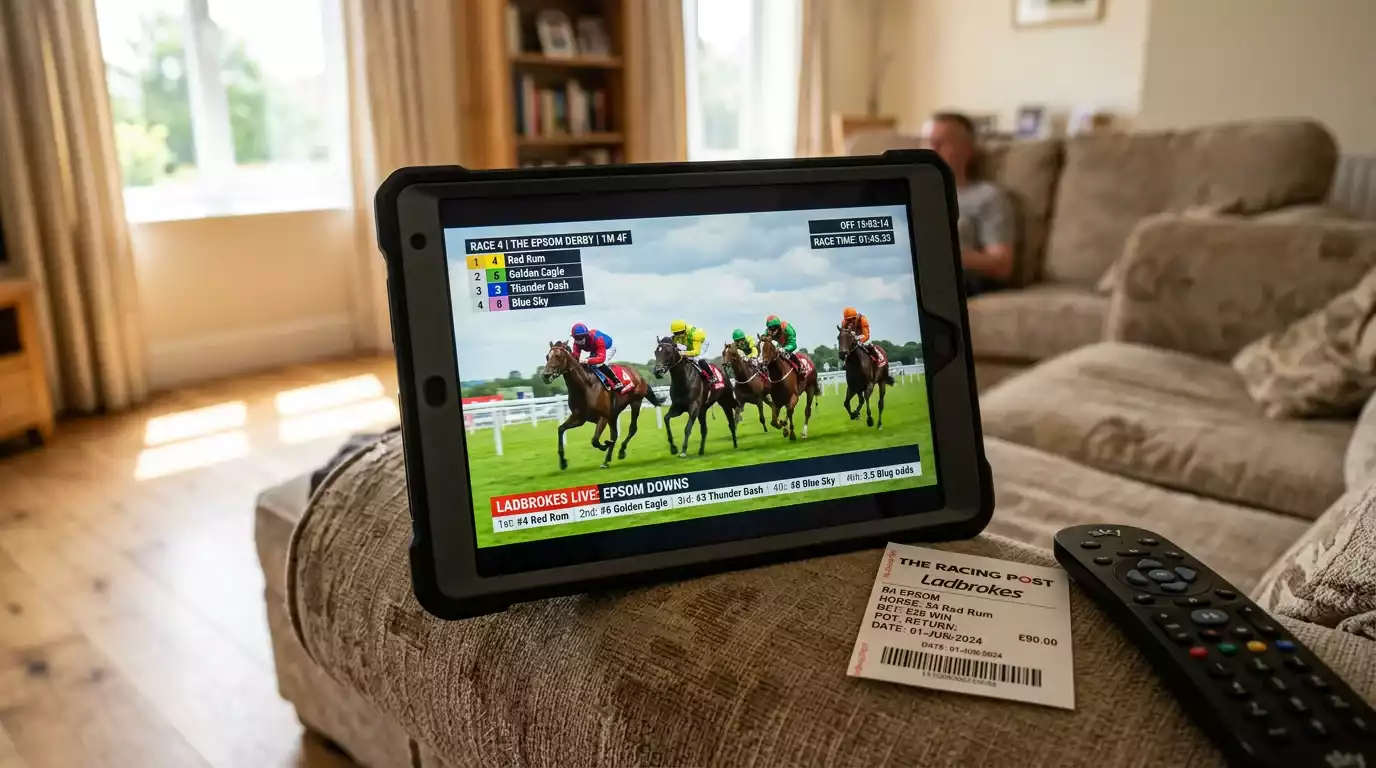
Best Odds Guaranteed is the closest thing to free money in horse racing betting, and most punters either do not know it exists or do not use it properly. Here is what it does: you take a fixed price on a horse in the morning. By the time the race starts, the Starting Price has drifted to a bigger number. With BOG, you get paid at whichever price is higher – the one you took or the SP. You keep the upside, the bookmaker absorbs the risk.
How BOG works in practice
You back a horse at 8/1 in the morning. By race time, money for other horses has pushed your selection’s SP out to 12/1. With Best Odds Guaranteed, your bet settles at 12/1 instead of 8/1. If the SP had shortened to 5/1, you would still be paid at your original 8/1. The bookmaker guarantees you the best of either price. Most major UK bookmakers offer BOG on UK and Irish racing, though terms vary – some restrict it to bets placed after a certain time, others exclude specific markets.
BOG vs no BOG
Stake: £20. Early price taken: 6/1. SP at race time: 10/1.
Without BOG: returns £20 x 6 = £120 + £20 stake = £140.
With BOG: returns £20 x 10 = £200 + £20 stake = £220.
Difference: £80 extra, on the same bet, for doing nothing except choosing a bookmaker that offers the guarantee.
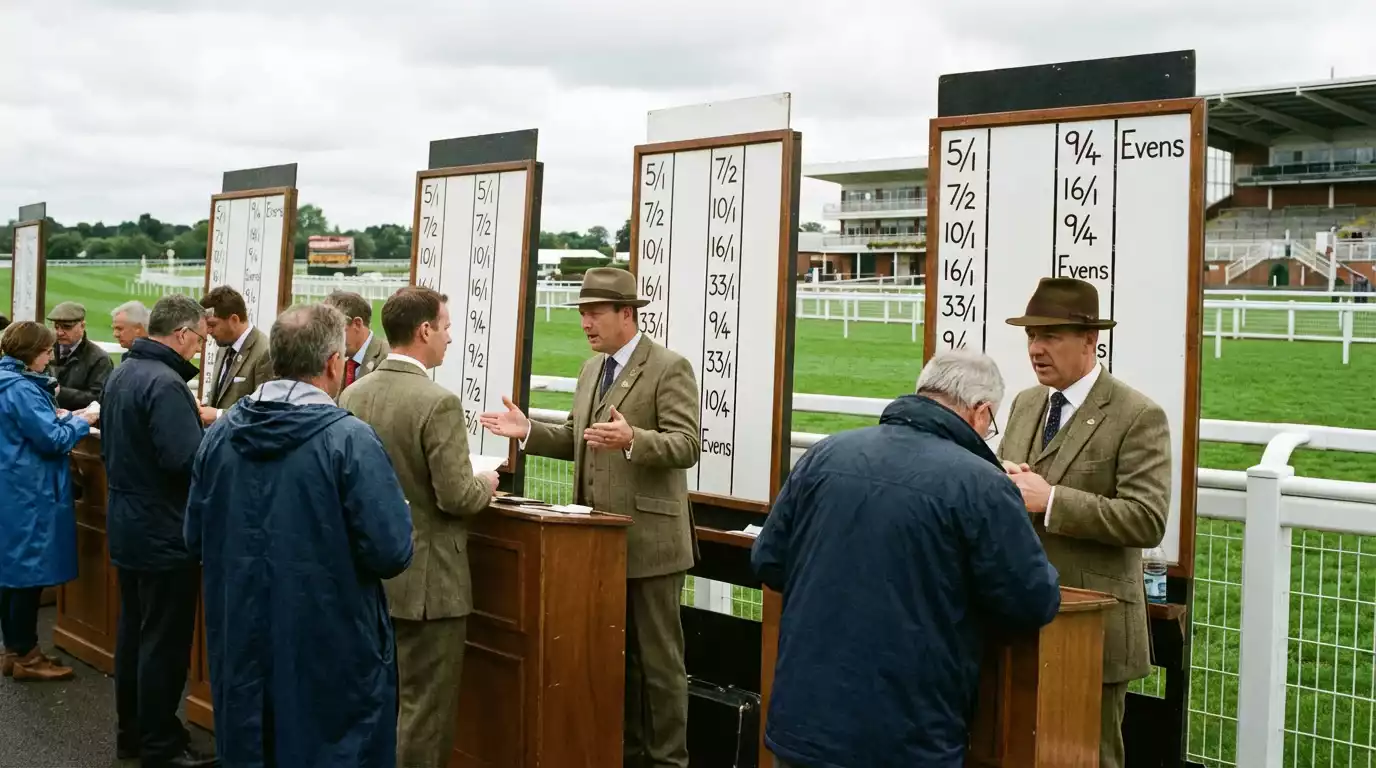
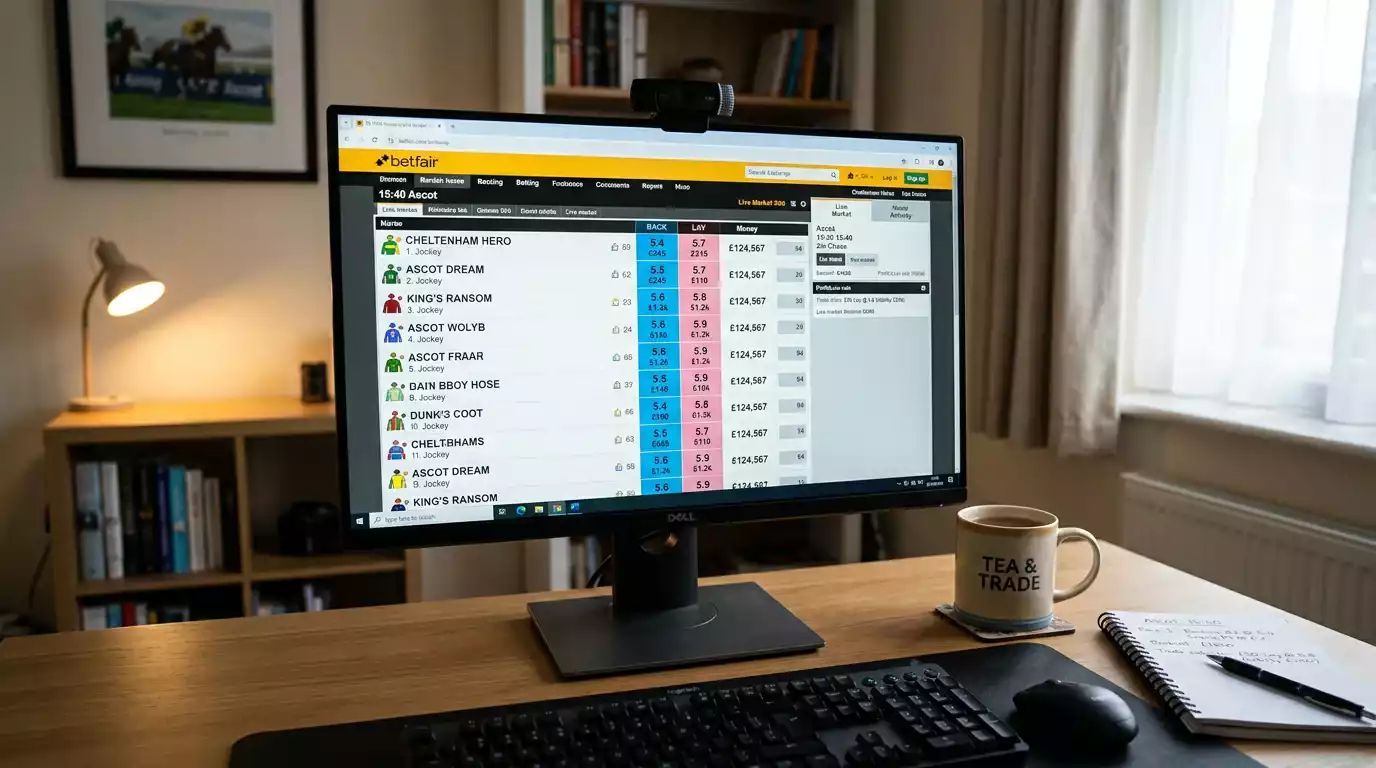
The real edge compounds when you hold accounts with multiple operators. Research across recent seasons consistently shows that maintaining two or three active bookmaker accounts delivers 2-5% better returns than sticking with a single operator. The reason is simple: prices vary across bookmakers, and taking the best available price on each race – combined with BOG as a safety net – creates a structural advantage that accumulates over hundreds of bets. No other adjustment to your betting process offers as much return for as little effort.
BOG does have limits. Most operators restrict it to UK and Irish races, bets placed on the day of the race, and standard win or each way markets. Ante-post bets and enhanced price offers are usually excluded. But within those parameters, there is no reason not to activate it on every qualifying bet. It costs nothing. It pays out regularly. And it rewards the discipline of taking early prices when your form analysis gives you conviction – which is exactly the behaviour that separates profitable punters from reactive ones.
Flat Racing and National Hunt – Two Sports Under One Roof
I once watched a colleague who specialised in Flat sprint handicaps attempt to bet his way through a soggy Wednesday card at Wetherby. He lost every race. Not because he lacked skill, but because he was applying the wrong framework. Flat racing and National Hunt are nominally the same sport – horses running on tracks – but the skills required to bet on each are almost entirely different.
Flat racing
Runs primarily from April to October on turf, year-round on all-weather surfaces. Distances from five furlongs to two miles four furlongs. No obstacles. Emphasises speed, acceleration, and tactical positioning. Draw bias is a significant factor on many courses. Horses typically start racing as two-year-olds. The Classics – the 1,000 and 2,000 Guineas, the Oaks, the Derby, and the St Leger – anchor the season.
National Hunt
Runs primarily from October to April, peaking over winter and spring. Distances from two miles to four miles and beyond. Races include hurdles (smaller obstacles) and steeplechases (larger fences plus ditches). Emphasises stamina, jumping ability, and durability. Horses typically begin their careers at four or five. The Cheltenham Festival and the Grand National dominate the calendar.
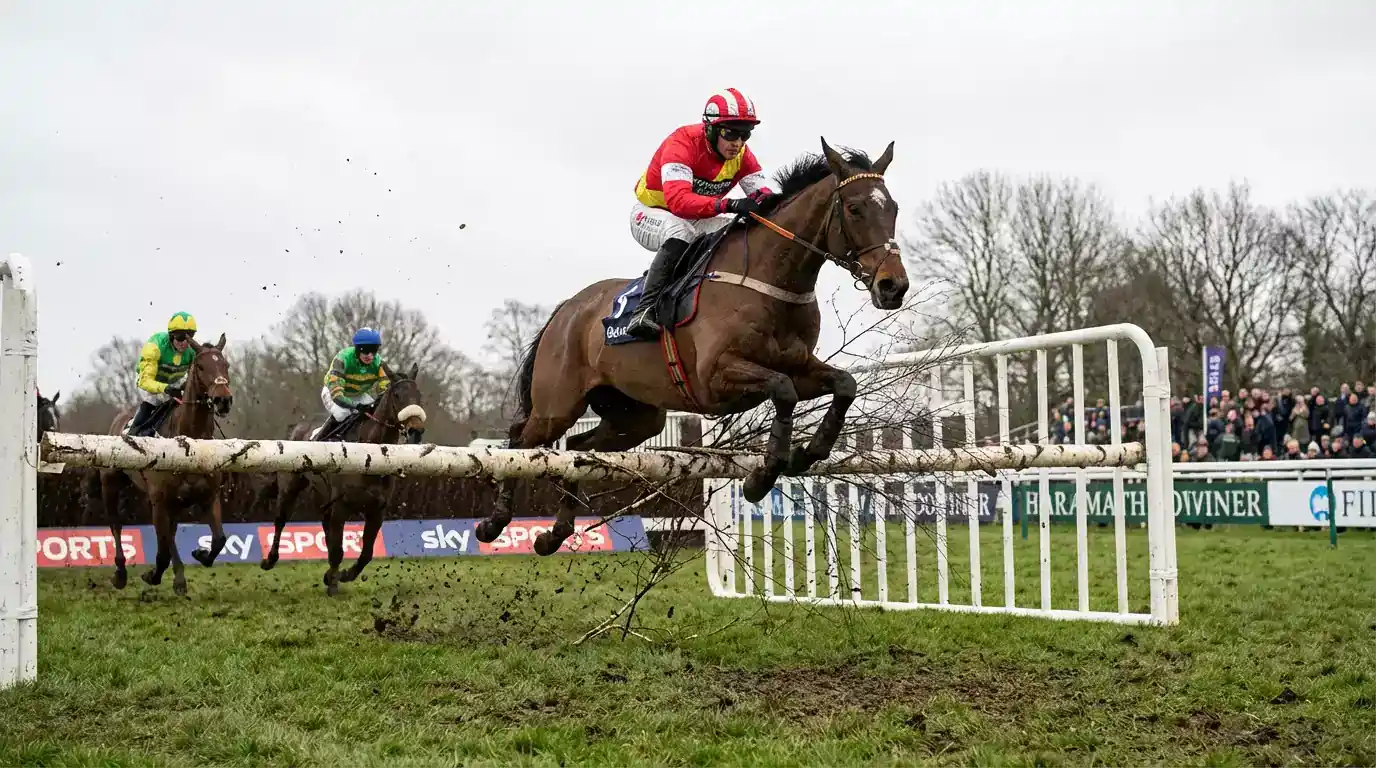
The practical effect on betting is profound. In Flat racing, a horse’s finishing position in a sprint is often determined by its drawn stall position and the pace of the race in the first two furlongs. In a three-mile chase, the form book stretches back years rather than weeks, because National Hunt horses race less frequently and their careers span a longer period. A Flat horse might run fifteen times in a season. A chaser might run five or six.
The horse population is contracting across both codes, but the squeeze is felt more acutely in National Hunt, where the economics of keeping a horse in training over multiple jumps seasons are tougher than maintaining a Flat horse with a shorter, more intensive career. Fewer horses mean smaller field sizes in some lower-tier National Hunt races, which affects each way terms and accumulator viability on midweek cards. For a punter, the key is recognising that your approach must shift with the code – and for a detailed exploration of how to make that adjustment, the Flat vs National Hunt comparison lays out the differences that matter for your betting strategy.
Affordability Checks, the UKGC, and What Changed in 2025
In February 2025, the UK Gambling Commission lowered the threshold for affordability checks from £500 to £150 in net monthly deposits. That single regulatory change has reshaped the UK horse racing betting market more than any event since the abolition of betting tax in 2001.
What the new threshold means for you
If your net deposits – the amount you put in minus withdrawals – exceed £150 in a calendar month, your bookmaker may be required to carry out a financial risk assessment. This can involve requesting bank statements, payslips, or other evidence that you can afford your level of play. The threshold applies across each operator individually, not across all your accounts combined.
The numbers tell the story of what happened next. In a major industry survey in 2025, 23.7% of respondents reported being subjected to affordability checks – up from 16.6% in 2023. Of those who were checked, 61% refused to provide the requested financial documents. A further 65% of UK bettors, when surveyed separately, said they would not be willing to hand over bank statements or pay slips to continue gambling. The response from the racing industry was captured in an open letter to the Culture Secretary signed by over 400 figures from British racing, describing the checks as “unprecedented state intrusion” that has “dismayed the millions of people who love horse racing.”
The downstream effect has been measurable. Roughly a quarter of surveyed punters said they would consider moving to the black market in response to affordability checks, with 11.8% stating they would definitely do so. And the evidence suggests many already have. Traffic to 22 identified unlicensed betting sites targeting UK horse racing customers grew by 522% between August 2021 and September 2024. The Betting and Gaming Council estimates that 1.5 million UK residents now spend up to £4.3 billion annually on unregulated gambling platforms – operators that pay no tax, contribute nothing to the Levy, and offer zero consumer protection.
Timeline of key regulatory changes
2023: Government publishes Gambling Act Review white paper proposing enhanced financial risk checks. 2024: Gambling Commission begins consultation on affordability check implementation. February 2025: Net deposit threshold for financial risk checks lowered from £500 to £150 per month. 2025-2026: Industry pushback intensifies; racing bodies lobby for threshold adjustment; black market growth accelerates.
The regulatory landscape is not static. The tension between protecting vulnerable gamblers and preserving a viable legal market is real, and both sides have data to support their position. Problem gambling rates among horse racing bettors sit at 2.8%, below the average across all gambling types, while 0.4% of the UK adult population – roughly 300,000 people – experience gambling-related harm. These are the numbers the UKGC balances against the growing evidence that tighter checks push recreational punters towards unregulated alternatives. For a detailed look at how affordability checks work in practice and what they mean for your accounts, the affordability checks guide covers the mechanics thoroughly.
When the Money Flows – Seasonal Betting Patterns in UK Racing
7%
UK adults betting on horse racing in April-July 2025 (peak season)
4%
UK adults betting on horse racing in July-October 2025 (off-peak)
48%
UK adults who participated in some form of gambling in the last 4 weeks
Every year around mid-March, my inbox fills up. People who have not thought about horse racing since the previous Grand National suddenly want to know about ante-post value for Cheltenham, which trainers target the Festival, and whether their each way selection has any chance. Then by mid-May, the same people disappear. This is not anecdote – it is the pattern confirmed by the Gambling Survey for Great Britain, which tracked participation in horse racing betting at 7% of UK adults during the April-to-July peak and 4% in the July-to-October period in 2025.
That near-doubling of participation during the spring window has direct implications for the betting market. Liquidity surges around Cheltenham in March, the Grand National in April, and the Guineas meeting in May. Bookmakers respond by sharpening prices, extending place terms, and ramping up promotional offers – all of which benefit the punter who is already active rather than the one who arrives for a once-a-year flutter.
The broader gambling participation figure – 48% of UK adults engaged in some form of gambling in the previous four weeks – drops to 27% when you exclude the National Lottery. Horse racing sits within that 27%, competing for the recreational pound against casino games, football betting, and online slots. The seasonal swing matters because it reveals when the market offers the most competitive pricing and when it contracts into a smaller pool of regular punters betting at margins that favour the bookmaker. The shrewd approach is to do your heaviest betting when the market is at its most liquid – festival season – and to be more selective during the quieter months when fewer runners, smaller fields, and weaker competition grades make value harder to find.
Your First Horse Racing Bet – A Step-by-Step Walkthrough
68% of visitors to British racecourses in 2025 were either casual racegoers or first-timers. That number surprised the BHA itself, and it tells you something important: the sport is not short of new interest. What it is short of is clear guidance for those newcomers. Brant Dunshea, the BHA’s Chief Executive, has spoken of “a vast untapped market for the sport, with significant potential for growth and over 25 million potential new fans.” The gap between potential interest and actual betting activity is largely a knowledge gap – and it is one this section closes.
From zero to first bet
- Choose a bookmaker – look for BOG on UK racing, a functional live streaming service, and an interface you find intuitive. Open at least two accounts from the start – price comparison begins on day one.
- Complete registration and KYC – you will need photo ID (passport or driving licence) and proof of address (utility bill or bank statement). This is a legal requirement under UKGC regulations. Complete it before you try to deposit – it saves frustration later.
- Make your first deposit – start with an amount you are comfortable losing entirely. This is not pessimism, it is bankroll management. You are paying tuition fees for market experience.
- Study the racecard before betting – pick one race, not seven. Read the form for every runner. Check the going. Identify two or three horses with claims based on form, distance, and ground preference.
- Place a simple bet – a win single or an each way bet on your strongest selection. Resist the accumulator. Your first bet should be a learning exercise, not a lottery ticket.
- Review the result regardless of outcome – did the race play out as the form suggested? Did the going affect the finish order? What would you do differently? This reflection is worth more than the bet itself.
One thing that catches newcomers off guard is the KYC (Know Your Customer) process. Bookmakers are legally required to verify your identity before allowing you to bet or withdraw funds. Some complete this check in minutes using automated systems; others request physical documents and take days. Getting this done immediately after registering means you will not face delays when you want to withdraw a winning payout.
The most common mistake I see from beginners is betting on too many races too quickly. A typical Saturday card across the UK can feature 40 or more races. Nobody has the form knowledge to assess all of them properly. Professionals narrow their focus – many specialise in specific courses, specific trainers, or specific race types. Start with one meeting, study it properly, and build from there. The strategic framework for long-term approach expands on this principle considerably.
Where UK Horse Racing Betting Goes From Here
The numbers paint a market in transition, not in terminal decline. Cumulative betting turnover across the first three quarters of 2025 fell 4.2% against 2024 and 12.8% against 2023. Prize money, however, rose to £194.7 million – funded by a Levy Board operating at record levels even as the revenue base beneath it contracts. That dynamic cannot last indefinitely. If turnover continues to fall, Levy yields will eventually follow, and when they do, the prize money that attracts owners and the fixture programme that gives punters races to bet on will both shrink.
David Hunter, speaking from the perspective of a smaller racecourse, laid out the stakes clearly: media rights are by far the biggest income stream for most tracks, and if less money flows in from those rights, it becomes difficult to sustain the prize money that keeps trainers, owners, and jockeys in the sport. The BHA projects that the number of races run in 2027 could fall 6-7% below 2024 levels. Fewer races mean fewer betting opportunities, which could accelerate the decline in a self-reinforcing cycle.
Against this, there are genuine reasons for cautious optimism. Racecourse attendance breaking the five million barrier signals that the live product retains its appeal. The 68% casual visitor figure suggests an audience that has yet to be converted into regular participants. The growth in Festival-level attendance and prize money indicates that the premium tier of racing is thriving even as the everyday programme struggles.
The UK horse racing betting market is not dying – it is splitting. Premier fixtures and major festivals are growing in attendance, prize money, and public interest. Core fixtures and midweek cards are losing both turnover and field quality. For the punter, this means the best value and the best racing will increasingly concentrate around the big meetings, while the daily grind of lower-tier betting requires sharper analysis and tighter discipline to remain profitable. Understanding this split – and positioning yourself on the right side of it – is the most important strategic decision you will make in the years ahead.
Common Questions About Horse Racing Betting in the UK
What is each way betting in horse racing and how does it work?
Each way is two separate bets of equal stake: one on your horse to win, one on it to place. If the horse wins, both bets pay out. If it finishes in a place position (typically top 2, 3, or 4 depending on the number of runners), you lose the win half but collect on the place half at a fraction of the win odds – usually 1/4 or 1/5. The total outlay is double your stated stake, so a “£10 each way” bet costs £20. Each way is most valuable on larger-priced selections in big fields where the place insurance provides meaningful returns.
How do horse racing odds work in the UK?
UK horse racing primarily uses fractional odds – expressed as 5/1, 7/2, 11/4 and so on. The first number shows profit relative to the second number as stake. At 5/1, you profit £5 for every £1 wagered. Decimal odds, used mainly on exchanges, express total return: 5/1 fractional equals 6.00 decimal (multiply stake by decimal for total return including stake). Starting Price (SP) is the official odds at race time, set by on-course market activity. Best Odds Guaranteed means your bet settles at whichever is higher – the price you took or SP.
What types of bets can you place on horse racing?
The main types are: win (horse must finish first), place (finish in a specified top position), each way (win and place combined), forecast (predict first and second in order), tricast (predict first three in order), and accumulator (multiple selections across different races combined into one bet). Full-cover bets like Lucky 15s and Yankees combine singles, doubles, trebles, and higher multiples from a set of selections. Pool bets through the Tote – including Placepot, Jackpot, and Scoop6 – offer an alternative pari-mutuel model where the payout depends on the total pool size rather than fixed odds.
What is Best Odds Guaranteed and which bookmakers offer it?
Best Odds Guaranteed (BOG) is a promotion where your bet is settled at either the price you took or the Starting Price, whichever is higher. If you back a horse at 8/1 and the SP drifts to 12/1, you get paid at 12/1. Most major UK-licensed bookmakers offer BOG on UK and Irish horse racing, though specific terms differ – some apply time restrictions, others exclude certain race types or enhanced odds offers. BOG is one of the most consistently valuable features available to horse racing punters and should be a standard criterion when choosing where to bet.
How do I read a racecard and understand horse racing form?
A racecard displays each horse’s recent finishing positions (form figures, read right to left for most recent first), jockey and trainer names, weight carried, age, official rating, draw position (in Flat races), and headgear. The form figures use numbers for finishing positions (1 = won, 2 = second), with letters for special results (P = pulled up, F = fell, U = unseated rider). A dash separates different seasons. Focus on the last three runs for current form, cross-reference with going and distance preferences, and check trainer-jockey combinations for above-average strike rates.
What factors should I consider before placing a horse racing bet?
Five factors form a reliable assessment framework: recent form (last three runs showing consistency), going (match the horse’s ground preference to the day’s conditions), distance (confirmed ability at the race distance), jockey-trainer combination (partnerships with strong records at the specific course), and class (horses dropping in class from a higher level often hold an advantage). Beyond these, check for course form (previous runs at the same track), the draw in Flat sprints (where stall bias can override ability), and market signals (a horse whose price is shortening sharply often indicates informed money).
What are the major UK horse racing events to bet on?
The calendar revolves around four peak periods. The Cheltenham Festival in March is four days of championship National Hunt racing – the Champion Hurdle, Queen Mother Champion Chase, Stayers’ Hurdle, and Gold Cup headline. The Grand National at Aintree in April is the single most bet-on race in the UK calendar. Royal Ascot in June delivers five days of the highest-quality Flat racing with international fields. The Classics – 1,000 Guineas, 2,000 Guineas, the Oaks, the Derby at Epsom, and the St Leger at Doncaster – run from spring through autumn and define the three-year-old generation. The full festival-by-festival guide covers each event with specific betting strategies.
Created by the ”Horse Racing Game Betting” editorial team.